Water Damage Restoration in Prune Hill, WA
Prune Hill is a 750-foot volcanic cone on the west side of Camas, one of the Boring Lava vents scattered across the Portland area, and it got its name from the prune orchards that covered its slopes before the houses did. The homes came in waves from the 1990s on: custom houses on big lots near the top, then subdivision after subdivision working down the flanks toward Lake Road and SR-14, with views of the Columbia and Mount Hood on the south side. Nearly every one of them has a daylight basement or a garage cut into the slope.
That slope is the problem. From November to March the ground on Prune Hill is saturated, and water follows the grade straight at the uphill wall of every house below it.
This site connects Prune Hill homeowners with an independent local water damage provider by phone. The provider walks the outside of the house first, because that is where the water started.
Prune Hill water damage, on the uphill wall
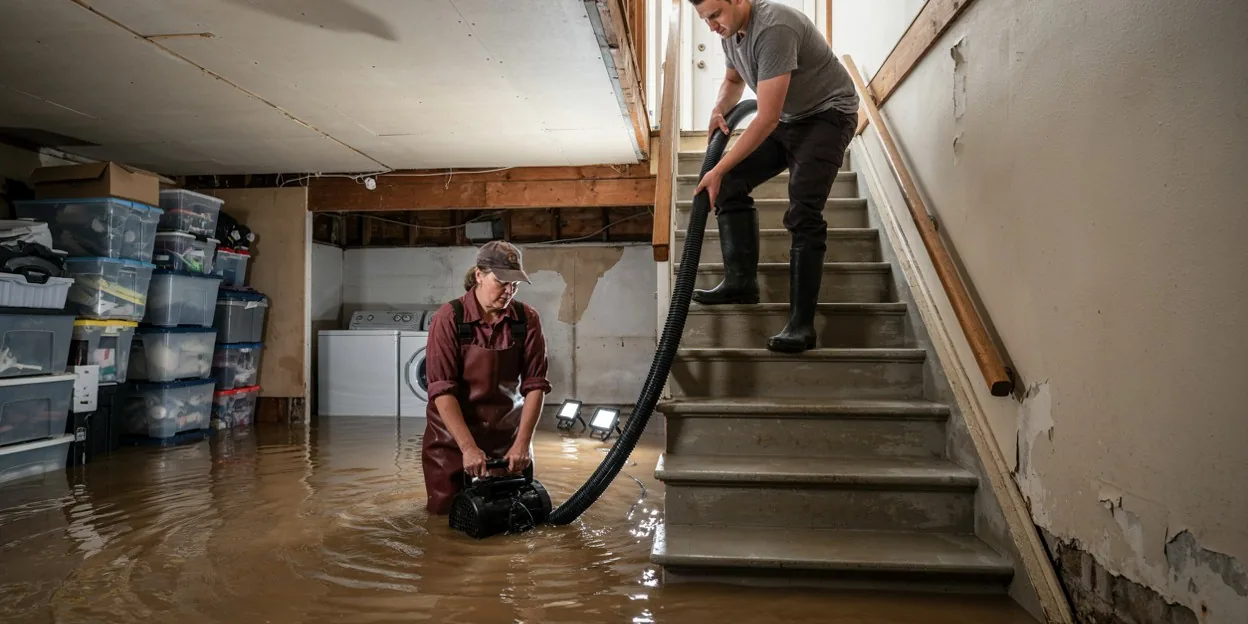
Carpet wet along one wall of a daylight basement in February is a water extraction job, and the crew will open the base of that wall to dry the framing behind it. Muddy runoff that came through the garage from the yard above is flood cleanup, because hillside water carries what the yard carried. A supply line in the garage ceiling that split when the east wind dropped the hill into the teens is burst pipe water damage cleanup, and the ice storm of January 2024 produced plenty of them.
Why the fix on Prune Hill is outside the house
Drying the wall never sticks unless the water on the uphill side has somewhere else to go. The provider looks at the downspouts, the footing drain outlet, and the grade against the foundation before the equipment goes in, and the rebuild afterward goes through the City of Camas permit desk like any other work inside the city.
Call (360) 226-7395 and say which wall got wet. We route you to an independent local water damage provider working on Prune Hill.
Services Available in Prune Hill
Water Extraction
Standing water pulled off a kitchen floor, a daylight basement, or a garage slab, then metered to see which walls it climbed.
Structural Drying
Air movers and dehumidifiers set by the readings, running until fir subfloor, studs, and drywall reach their dry target in a wet Camas winter.
Crawl Space Water Extraction
Water pumped out from under a bungalow or a hillside home, wet insulation pulled, joists and subfloor metered and dried.
Burst Pipe Water Damage
The rooms a split supply line soaked during an east-wind cold snap, pumped out and dried once the plumber has the water off.
Roof Leak Water Damage
Wet attic insulation, ceilings, and walls dried after a Gorge windstorm or a clogged valley let months of rain inside.
Leak Detection
Finding the hidden supply line, drain, or slab leak behind a high water bill or a soft floor before anyone opens a wall.
Flood Cleanup
Mud, creek water, and hillside runoff removed from a house after Lacamas Creek, the Washougal, or a saturated slope let go.
Hardwood Floor Drying
Cupped fir and oak floors in downtown bungalows and newer hillside homes metered and dried before anyone decides to tear them out.