Roof Leak Water Damage in Camas, WA
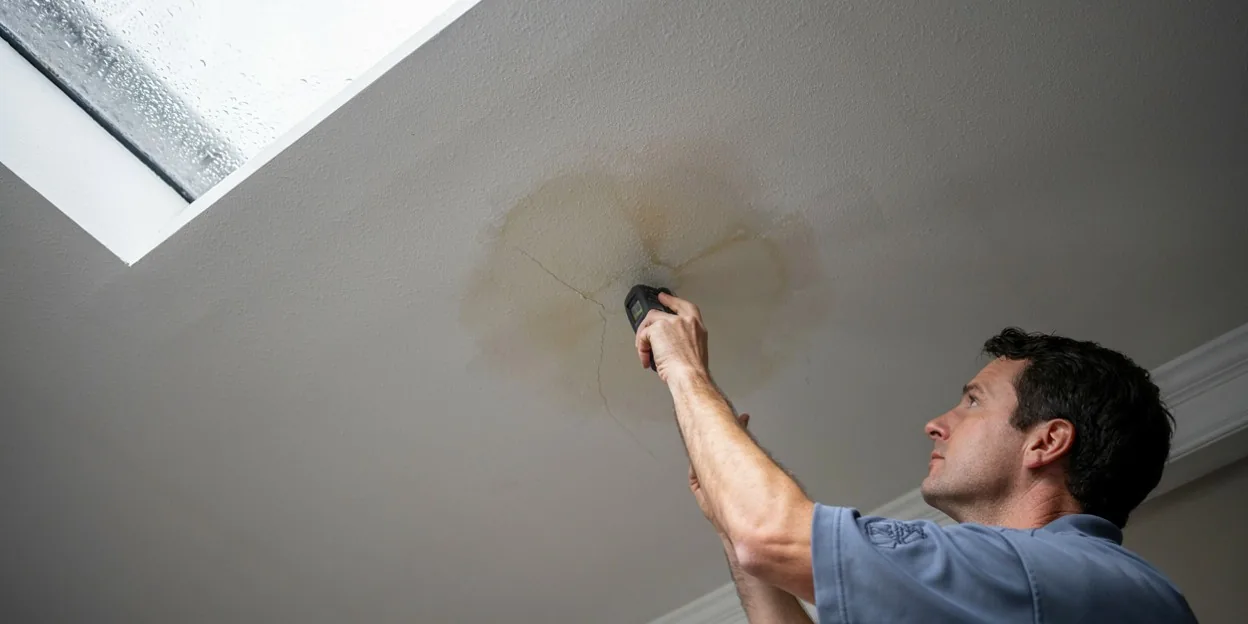
The stain on the bedroom ceiling was the size of a dinner plate in December. It is the size of the bed now, the paint is bubbling, and in the attic the insulation under that spot is flat and gray. This site connects you by phone with an independent local provider who does roof leak water damage work in Camas and across Clark County.
The roofer stops the water; the crew dries what it already reached
A roof leak is two jobs. The roofer finds the lifted shingle, the failed flashing at the chimney, or the valley packed with fir needles, and stops new water. The restoration crew handles everything the water already soaked on the way down. They start in the attic with a light and a meter, reading the sheathing, the rafters, and the top of the ceiling drywall, and pull the wet insulation so the framing can breathe.
Below the attic, they meter the ceiling and follow the wall the water ran down, because a roof leak rarely stays in one room. Then they set the drying equipment and come back to read until the rafters and the ceiling are at their dry target. The full drying process is on the structural drying page.
Bucket, tarp, photos, then the call
Put a bucket under the drip and, if a ceiling panel is sagging with water behind it, poke a small hole at the low point to let it drain before it falls. Do not stand under a sagging ceiling. If you can safely get a tarp over the spot, do it, and if you cannot, do not climb a wet roof in the wind.
Photograph the ceiling, the attic if you can reach it, and the wall below. Note when the stain first appeared, because a leak that has been dripping since fall has soaked more than the one from last night's storm. Then call and describe what you see.
Insulation out, sheathing and rafters dry, ceiling drywall by the reading
Wet blown-in or batt insulation in the attic comes out over the affected area. Roof sheathing and rafters dry in place in most cases, and the crew checks them for soft spots and dark staining that means the leak is older than you thought. Ceiling drywall that is stained but firm and reads dry enough can stay and be repainted after drying. Drywall that has sagged, softened, or grown mold comes down.
If the water made it to a wood floor below, hardwood floor drying is the next question. If the leak was at a plumbing vent or in a wall rather than the roof itself, leak detection sorts out which it is before anyone cuts.
Fir needles, Gorge wind, and roofs that never get a dry month
Camas roofs work harder than most. The rain runs from November to March with barely a break, and the Douglas fir that shades every older street drops needles into valleys and gutters all winter, so a roof that sheds fine in October is damming water by January. The east wind through the Gorge lifts shingles on the exposed side of Prune Hill and the Washougal River bluffs, and the wind-driven rain gets under laps that would never leak in a straight-down storm.
The 1900s to 1940s bungalows downtown have low-slope porch roofs and chimneys with flashing that has been patched for decades. The 1990s to 2020s homes on the hill have complex rooflines with a dozen valleys and skylights, each one a place for needles to collect. The ice storm of January 16 and 17, 2024, added a rarer problem: ice damming at the eaves on houses that have never seen it, with meltwater backing up under the shingles and into the attic.
Calling about a stained ceiling in Camas
Have the address ready and say where the stain is, whether the ceiling is sagging, when you first noticed it, and whether a roofer has already been out. Call (360) 226-7395.