Water Extraction in Camas, WA
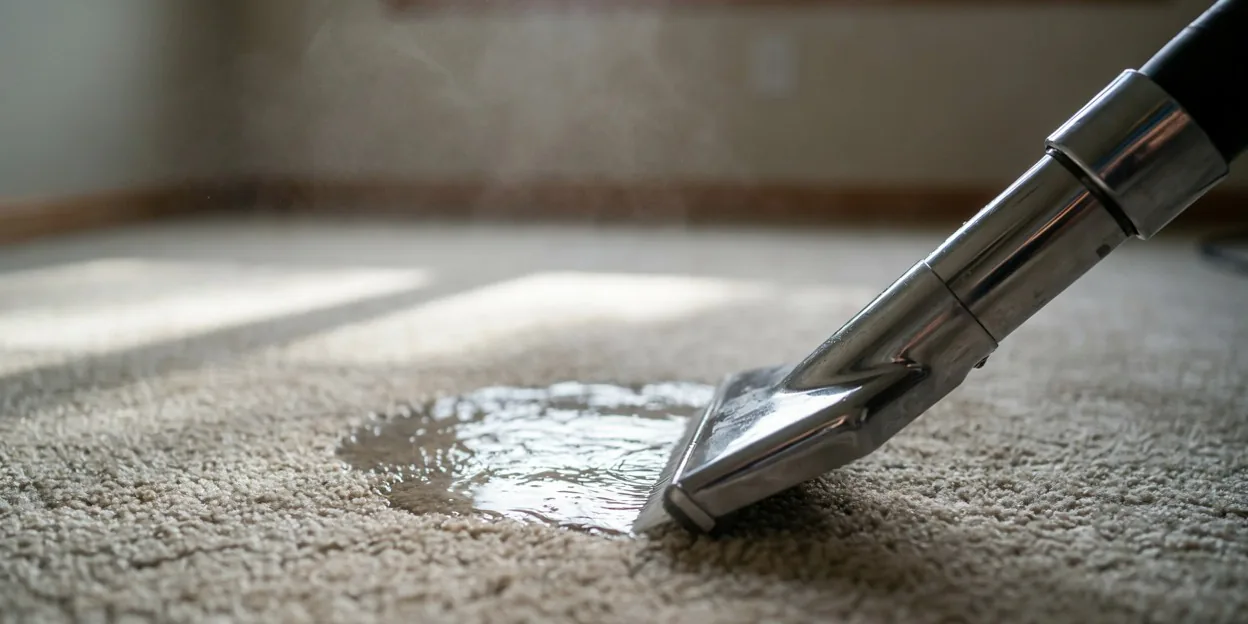
You came down the stairs to the daylight basement and the carpet squished. The uphill wall is dark at the bottom, the boxes along it are soaked, and the water has already crossed to the family room. This site puts you through by phone to an independent local provider who does water extraction in Camas and across Clark County.
Pumps first, then the meter goes to the base of every wall
The crew starts by getting the bulk water off the floor with a truck-mounted or portable extractor, working from the deepest point outward. On carpet they pull the pad, because pad holds water like a sponge and never dries in place. On a slab they squeegee toward the extractor and check the cove where the slab meets the wall.
Then the meter comes out. They read the base of every wall in the wet rooms and the rooms next to them, the underside of cabinets, and the floor along the doorways. Water in a Camas house moves along the framing and the seams, so a puddle in the laundry room shows up as a wet stud bay in the hall. The readings set the drying plan, and structural drying equipment goes where the numbers say.
Get the boxes up and the valve closed before the truck arrives
If the water is from a pipe, close the valve at the meter box by the street or the main where it enters the house. If it came in from outside, it will keep coming until the rain stops or the downspout is moved, so redirect what you can. Stay out of any room where water reached the panel or an outlet.
Lift furniture legs onto foil or blocks. Carry boxes, rugs, and anything cardboard to a dry room. Photograph each room before anything leaves the house. Then call and describe how deep the water is and where it seems to have come from.
Carpet pad goes, the slab stays, the drywall depends on the reading
Carpet pad almost always comes out. The carpet itself can often be dried and reset if the water was clean and it was not wet for days. A concrete slab is fine once it is dry. Drywall depends on the meter and the water source: a clean supply-line loss caught early usually dries in place, while drywall that sat in water for a weekend, or that took creek water, gets cut out along a line above the wet mark.
Wood floors get their own evaluation, because a fir or oak floor can look ruined at first and still come back. Read about hardwood floor drying before you assume it is lost. If the water went through the floor to the space below, the crawl space is part of the same job.
Daylight basements on Prune Hill and slabs in Grass Valley
Camas water losses split by neighborhood. Up on Prune Hill and around Lacamas Lake, the 1990s and 2000s homes have daylight basements and garages cut into the hill, and the uphill wall takes the runoff when the slope saturates in January. That water comes in at the footing and shows up as wet carpet along one wall, and it will come back with the next storm unless the drainage on that side is fixed.
Down in Grass Valley and the newer streets off Lake Road, slab-on-grade homes take water from appliance lines and water heaters, and the water spreads across the whole floor level before anyone sees it. Downtown, the 1900s to 1940s bungalows send water through the fir floor into a crawl space, so the extraction is upstairs and the pump-out is underneath. The February 1996 flood put water into homes along the Washougal River and the Columbia lowlands, and those houses are still here, so tell the crew if the water came from a creek rather than a pipe.
Calling about standing water in Camas
Have the address ready and say how deep the water is, which rooms it reached, whether it came from a pipe or from outside, and whether the valve is closed. Call (360) 226-7395.