Structural Drying in Camas, WA
The puddle is gone. You mopped, you ran the furnace fan all weekend, and the floor feels fine to the touch. The baseboard along the back wall is starting to swell anyway, and the room smells like a wet basement every time you open the door. This site connects you by phone with an independent local provider who does structural drying in Camas and throughout Clark County.
Reading the wood before the fans go on
The crew meters every material in the wet area against a dry reference in the same material somewhere else in the house. Fir subfloor, Douglas fir studs, drywall, and the plywood under a tile floor each have their own dry number, and the crew writes those numbers down before a single machine runs. That log is the baseline the whole job is measured against.
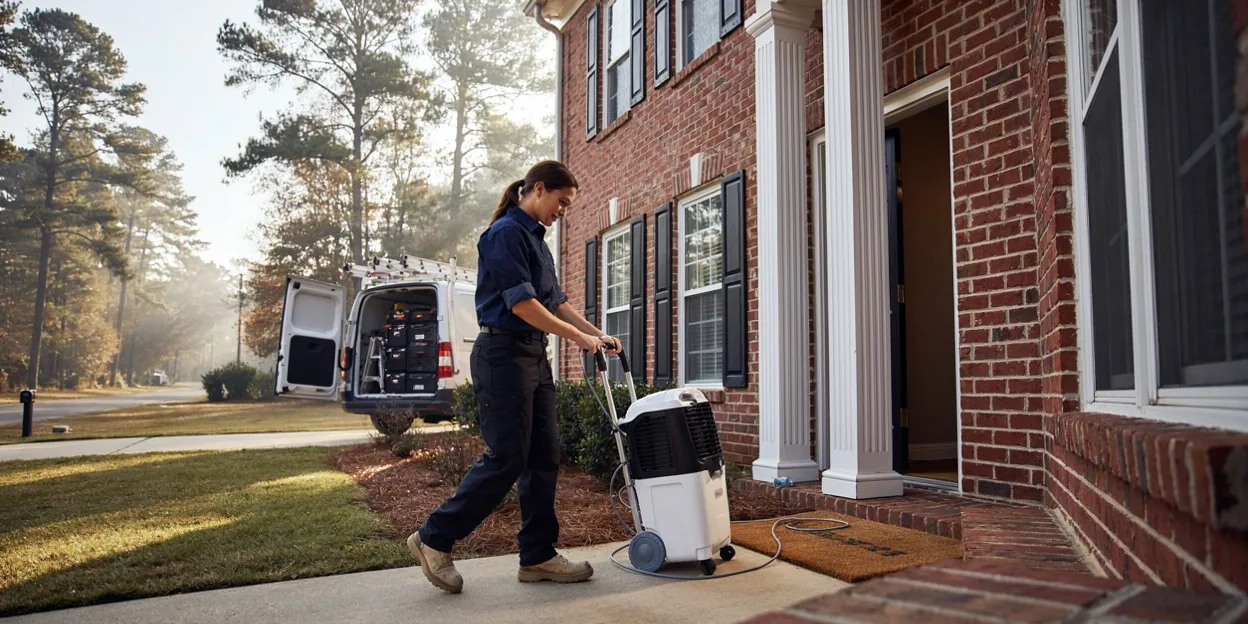
Then the air movers go in, pointed at the wet surfaces, and the dehumidifiers go in to pull the moisture those fans lift out of the wood. In a Camas winter the outside air is already near saturation, so opening windows does close to nothing. The room gets closed up and the equipment does the work. The crew comes back to take readings, moves equipment as areas dry, and pulls it when the numbers meet the target.
Leave the doors closed and the machines running
Once equipment is set, leave it on. The most common reason a drying job stalls is that someone turned the dehumidifier off at night because of the noise. Keep interior doors closed the way the crew left them, keep the heat on, and keep pets out of the room with the cables.
If you have not called yet, get the water off if it is from a pipe, lift what you can off the floor, and take photos. Then call and say how long the area has been wet, because a floor that has been damp for a week dries on a different plan than one that got wet last night.
What dries in place and what comes out
Framing almost always dries in place. Subfloor usually does, if the water was clean and the drying started within a few days. Drywall that got wet from a clean source and reads under the failure point on the meter can stay, and drywall that swelled or sat in water gets cut out a foot or two above the wet line so the cavity can dry. Fiberglass insulation in a wet wall comes out, because it holds water against the studs.
Wood floors are their own question, and hardwood floor drying covers it. If the water first had to be pumped out, water extraction comes before any of this. When the water came from a roof leak, the attic insulation and the ceiling drywall are on the list, which is covered under roof leak water damage.
Drying a house that is shut tight against a Camas winter
Camas gets most of its 50-plus inches of rain between November and March, and the houses stay closed the whole time. Relative humidity outside sits in the 80s and 90s for weeks. A wet wall in a downtown bungalow in January is not going to dry on its own before spring, and the fir subfloor under it will go soft first. The dehumidifier is what makes drying possible here, not the fans.
The hillside homes on Prune Hill and around Lacamas Lake add a second problem: the slope keeps feeding the uphill wall. Drying that wall while the ground outside is still saturated means the crew has to deal with the drainage at the same time, or the readings never come down. After the January 2024 ice storm, when the east wind dropped the town into the teens and pipes split in garages across Camas, many homes had wet walls and no heat for days, and those jobs took longer because the framing was cold as well as wet.
Calling about a house that is still damp
Have the address ready and tell us where the water started, how long ago, whether the source is stopped, and whether the wall that got wet is on the uphill side of the house. Call (360) 226-7395.